Speculative Decoding Is the Most Underrated LLM Inference Trick
Speculative decoding can double or quadruple LLM throughput with zero quality loss — yet most production stacks ignore it. Here's why, and when it's worth the complexity.
Tag
18 posts

Speculative decoding can double or quadruple LLM throughput with zero quality loss — yet most production stacks ignore it. Here's why, and when it's worth the complexity.

Lesson 09: a teacher model writes 420 realistic questions and labels them, 406 kept, for 49 cents; 183 join 20,000 templates. Three small models learn from them side by side: the from-scratch decider, BERT-mini with LoRA, and Qwen2.5-0.5B with LoRA. Coverage on teacher-written questions, before and after, with the precision that came with it.

Lesson 08: the tiny decider learns to write the whole request as JSON, operation and parameters, and a grammar built from the catalog constrains every token. Validity goes to 100%. The number that matters is the one a grammar cannot fix: answers that are valid and wrong.

Lesson 07: the Lesson 01 GPT, shrunk to 0.83M parameters, writes one token after a question: the operation that answers it. Beside it, pankhllm's hashed logistic regression. On phrasings neither saw, a threshold alone holds 98% precision for neither; with pankhllm's known-words guard, the transformer does, at 41.2% coverage.

Lesson 06: LoRA written by hand in a few dozen lines of PyTorch, training 2.11% of a 5.9M-parameter model on the same task as a full fine-tune. The adapter is 0.51 MB instead of 23.44 MB and merges back to within rounding. It was not faster per step, and it followed fewer requests. The real numbers.

Lesson 05: teach a 5.9M-parameter story model to follow a request, with two special tokens, a chat template and prompt masking. On 50 held-out requests, the share of stories with the right character and place went from 12% to 44%. Here is what it learned and what it did not.

Lesson 04: fine-tune the 5.9M-parameter Tiny Storyteller on 300 stories about a new character. Its old quiz perplexity jumps from 9.09 to 156. Mixing two old windows into every batch of twenty holds it at 11.75. Real numbers, and what the model got wrong.

SQL cannot say 'the customer threatens to cancel'. sqljev adds jev(), jev_prob() and jev_choice() to SQL Server, PostgreSQL, MySQL, Snowflake, Databricks, BigQuery, Redshift and DuckDB, and answers them with Laya, an open-weight decision model that runs on your hardware, returns calibrated probabilities instead of text, and can be fine-tuned on your own tables. 140,000 decisions in 271 seconds on one laptop GPU; re-running all 13 queries, 0.9 seconds. Apache 2.0, version 0.1.0.


Most of an agent's LLM calls are not writing anything. They are decisions: which tool, which skill, which parameters, made thousands of times a day by a model paid in seconds and tokens. pankhllm sits where your app already calls an LLM, learns those decisions from its own traffic, and starts making them in 0.2 ms on a CPU with a 262 KB model. What it is not sure about still goes to your LLM. On the same 14 questions: a 12B planner 1,743 ms, Laya 49 ms, pankhllm's own model 4 ms, all 14 correct. Here is what it is, what it is not, and where it stops.

A programming community I take part in watches for AI-generated answers. The moderators have real reasons; so do the people the rule lands on. Here are both cases argued fairly, the three things both sides actually want, and a tiered guideline — verification, disclosure, capacity — that is stricter than a blanket ban, not looser.

Flipper Devices' pocket Linux box promises an LLM that runs offline and knows the device inside out. Rockchip's own numbers say what a 6 TOPS RK3576 really does — and the NPU driver isn't in the kernel Flipper chose.

A 17MB runtime that runs LLMs on AMD's Ryzen AI NPUs — built by three academics, acquired by AMD on July 17, 2026, folded into ROCm in August. The NPU rung of the edge ladder just got real.

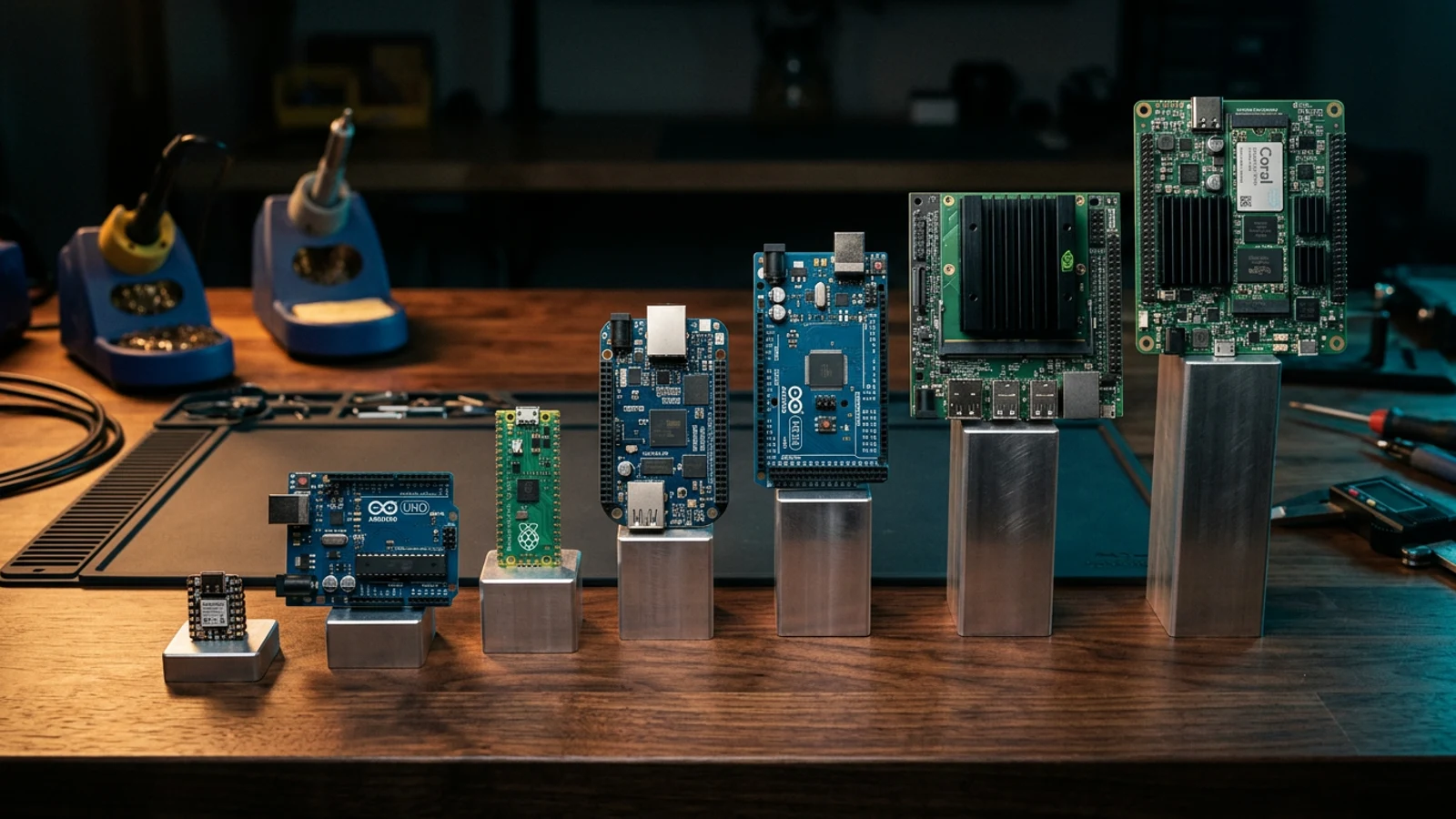
A $5 Pico 2 writes TinyStories. A $15 Pi Zero 2 W runs SmolLM2-135M. A $299 RISC-V board claims 30B. What AI really fits at every rung of the edge hardware ladder.

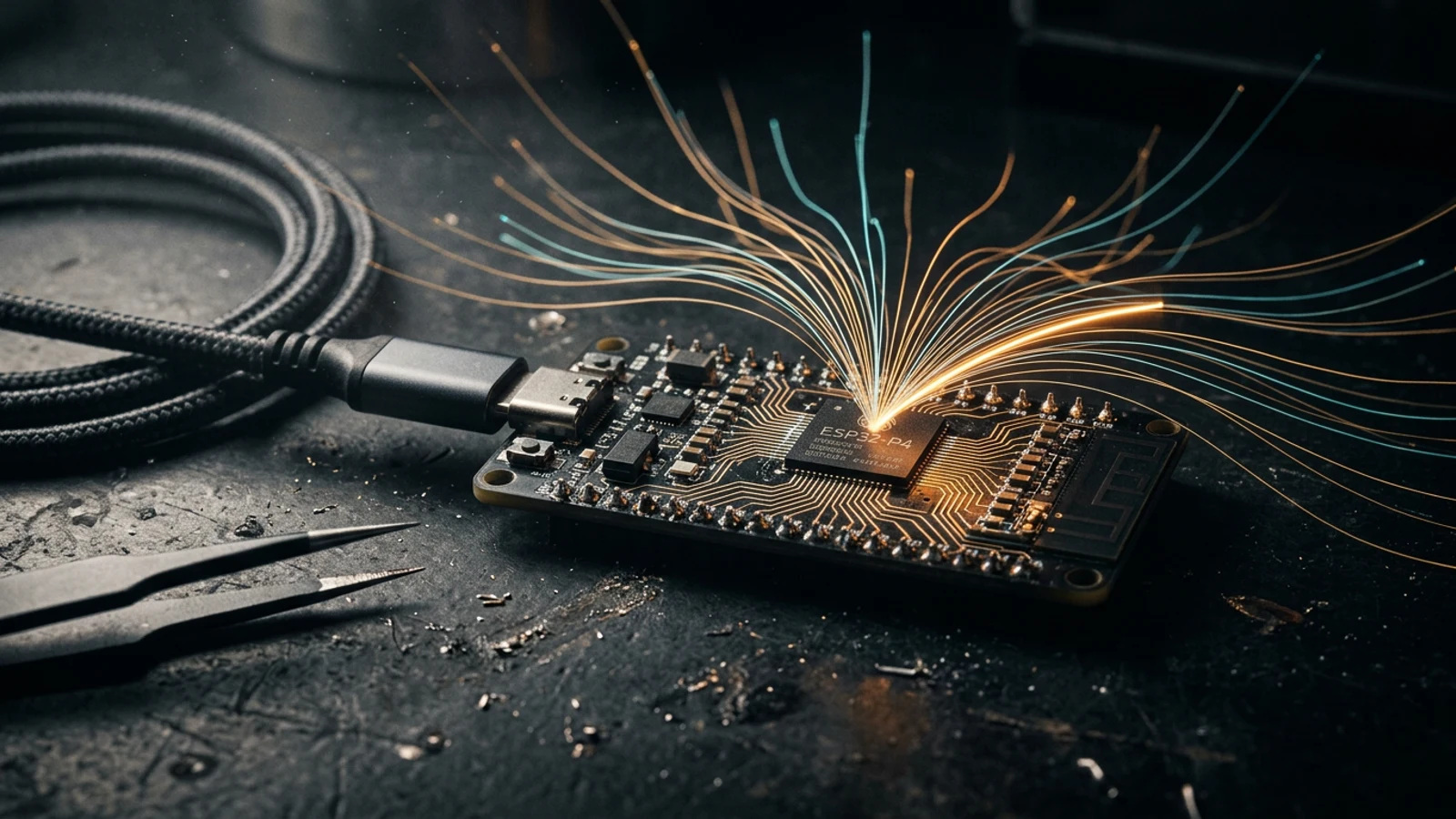
On August 5, 2026 a 180.9M-parameter mixture-of-experts LLM ran on a $6-10 ESP32-P4 — and got two Hacker News points. The undercovered microcontroller AI story of the year.

In July 2026 a 28.9-million-parameter LLM ran fully on-device on an $8 ESP32-S3 at almost 10 tokens per second. Here's how the trick works, who built it, what's hype, and what you can actually build with a microcontroller LLM today.

Speculative decoding promises faster LLM inference without touching model weights. The math holds up — but the production story is messier than the papers admit.

Traditional RAG retrieves documents and stuffs them into context. Agentic RAG plans queries, evaluates results, and iterates until it finds the right answer.

The shift from AI-as-tool to AI-as-agent represents the biggest paradigm change since the internet. Here's how we got here and where it's heading.