Ryzen AI NPUs Gain Unsloth and BaseRT Support as Windows PCs Pool Memory for Local LLMs
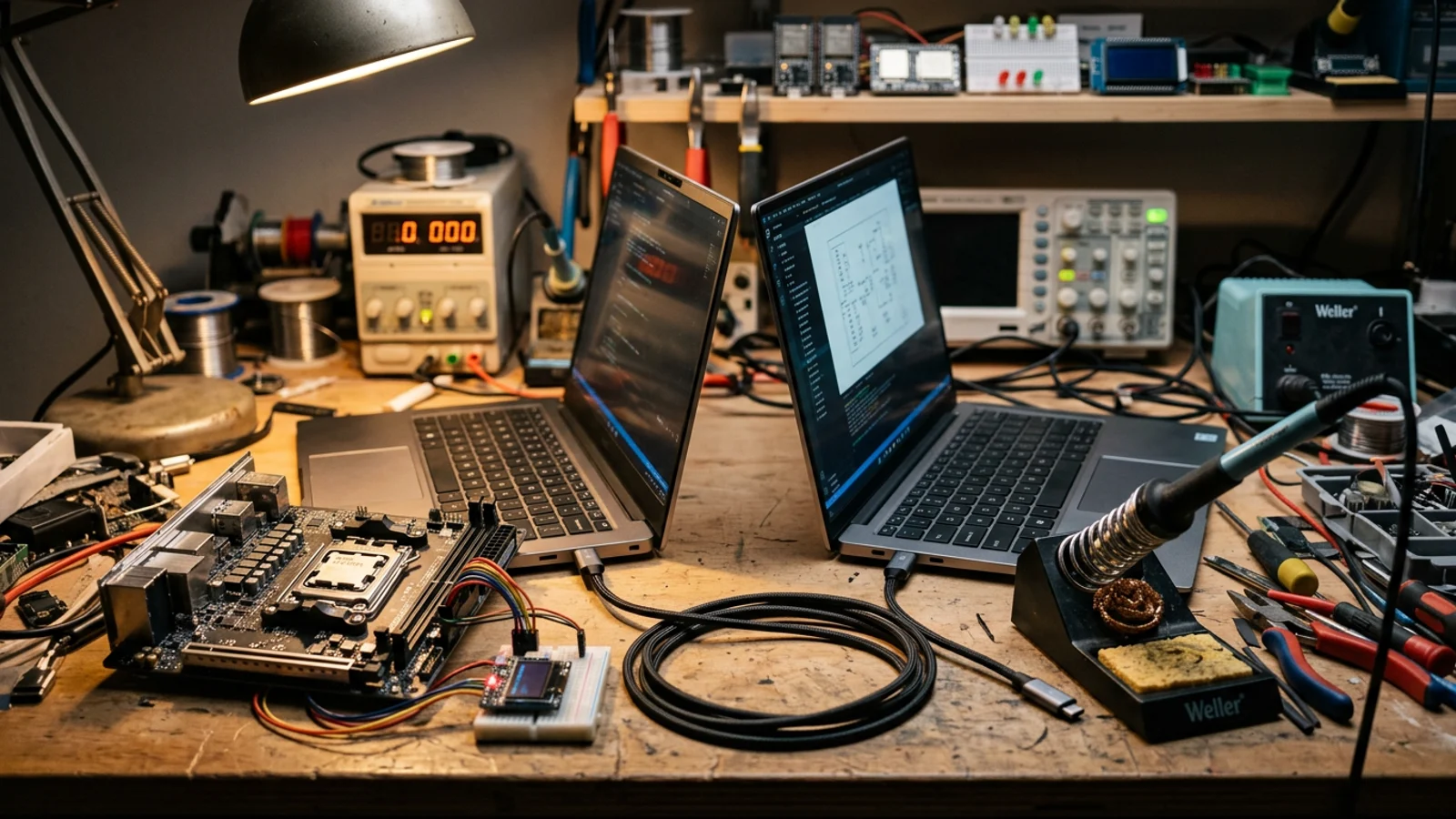
AMD's XDNA 2 NPU gets Unsloth Desktop and BaseRT support, Microsoft previews USB4 clustering for big local models, and Edge swaps in a 2.3B browser model.
Unsloth Desktop adds AMD XDNA 2 NPU support
On November 20, 2026, AMD and Unsloth said Unsloth Desktop now supports the XDNA 2 NPU in Ryzen AI PCs, per newsroom.amd.com. Apps send requests to an OpenAI-compatible Unsloth endpoint, and Lemonade and FastFlowLM run the model on the NPU. AMD says this covers more than 100 agentic apps, including Open WebUI, Cline, LangChain and GitHub Copilot. phoronix.com reports AMD confirmed the Linux builds work too.
Caveat: the "100+ apps" figure is a compatibility claim, since any app that speaks the OpenAI API can connect. The excerpts include no NPU speed or accuracy numbers. Separately, AMD's amd.com post says FastFlow v1.0.13 (released November 13) adds an early-access iGPU flow. AMD's own figure is a first token about 43% sooner than llama.cpp on Vulkan at 16K context.
BaseRT adds Ryzen AI GPU and NPU paths, self-reported 664% gain
New on November 20, 2026: Base Compute's Lukas Wesemann announced AMD support in the BaseRT runtime. The team worked with AMD and Dell on the Ryzen AI Max+ 395 and Ryzen AI 9. It claims up to 664% faster on-device LLM performance using the GPU and NPU.
The NPU is said to add another 41% while using 2-3x less energy per token. As a demo, an email agent handled 50 emails in 17 seconds instead of 2-3 minutes. All of this is the vendor's own data, and the excerpt does not name the baseline behind the 664%. The energy-per-token claim is the more interesting one for laptops, and it needs independent measurement.
Microsoft previews RDMA over USB4 to split one model across PCs
On November 19, 2026, Microsoft announced a developer preview of RDMA over USB4 on Windows. Connect USB4 PCs with ordinary cables and a compatible framework can run one model across their combined memory and GPU compute, using the NetworkDirect API. The demo is a llama.cpp fork whose RPC backend runs over NetworkDirect with tensor-parallel changes.
Microsoft tested up to three Ryzen AI Max PCs and up to four Intel Core Ultra Series 3 machines over Thunderbolt 4. The feature is off by default and needs a registry key and test signing. The Insider build is still "coming soon," so nothing has shipped yet. windowsreport.com notes the performance figures come from Microsoft and its partners, not independent testing.
Edge swaps Phi-4-mini for the 2.3B Aion Instruct
On November 19, 2026, the Microsoft Edge blog said Aion Instruct is now generally available in the browser. It replaces Phi-4-mini as Edge's built-in small language model, and the open weights are on Hugging Face.
At 2.3B parameters, Microsoft says it is smaller and faster than Phi and runs on more devices, with comparable quality on web tasks such as summarization and structured output. That quality claim is Microsoft's. Edge downloads the model only when a site or feature needs it, and only on devices that can run it well. Users can switch it off, which removes the model. A Windows release is promised "later this year."
ESP32-S31 display kits keep arriving, now with a 7-inch Ethernet board
On November 20, 2026, CNX Software covered the GUITION JC1060F570C, an ESP32-S31 development kit with a 7-inch capacitive touch display and an Ethernet port. The day before, it covered the Waveshare ESP32-S31-Touch-LCD-4.3C, a 4.3-inch kit with an optional DIN rail case. CNX says a VIEWE 4.3-inch board came out last month.
Three third-party boards on a new chip in about a month suggests the S31 is reaching makers. The summaries I could read give no pricing and no on-device AI demos, so treat these as display-centric hardware for now.
Most of today's numbers come from the vendors that make the chips and runtimes, so the sources are worth reading directly.
References & Citations
- AMD Newsroom — AMD and Unsloth bring NPU support to 100+ agentic AI apps, November 20, 2026 — https://newsroom.amd.com/news/amd-unsloth-bring-npu-support-agentic-ai-applications/
- Phoronix — Unsloth Desktop now supports the Ryzen AI NPU, including on Linux, November 2026 — https://www.phoronix.com/news/Unsloth-Desktop-Ryzen-AI-NPU
- AMD Developer — FastFlow now runs on AMD GPUs (v1.0.13, released November 13, 2026) — https://www.amd.com/en/developer/resources/technical-articles/2026/fastflow-now-runs-on-amd-gpus.html
- Base Compute (Lukas Wesemann) — BaseRT now runs on AMD Ryzen AI, November 20, 2026 — https://www.basecompute.co/blog/basert-amd-ryzen
- Windows Report — Windows PCs can team up over USB4 to run AI models, November 2026 — https://windowsreport.com/windows-pcs-can-now-team-up-over-usb4-to-run-ai-models-that-wont-fit-on-one-machine/
- Microsoft Edge Blog — Introducing Aion Instruct and Prompt API, November 19, 2026 — https://blogs.windows.com/msedgedev/2026/11/19/hybrid-intelligence-on-the-web-introducing-aion-instruct-and-prompt-api-in-microsoft-edge/
- CNX Software — GUITION ESP32-S31 development kit, November 20, 2026 — https://www.cnx-software.com/2026/11/20/guition-esp32-s31-development-kit-features-7-inch-capacitive-touch-display-ethernet-port/
- CNX Software — Waveshare ESP32-S31-Touch-LCD-4.3C, November 19, 2026 — https://www.cnx-software.com/2026/11/19/waveshare-esp32-s31-touch-lcd-4-3c-an-esp32-s31-4-3-inch-display-devkit-with-optional-din-rail-case/
Subscribe to new posts from theaivibe.org
Related Posts
A 26B Looped-MoE LLM Gets Squeezed to 3.85 GB for Phones as New Papers Cut Decode Costs
LookAtMyQuant packs Inkling-2-Mini into six Apple Silicon builds, while new papers tackle weight decoding, laptop fine-tuning and Cortex-M inference.
DEEPX's 25-TOPS NPU Reaches Raspberry Pi 5 as Physical-AI Papers Take Aim at Jetson Thor
A DEEPX NPU on a Sixfab Pi 5 HAT, a physical-AI model paper, a simulated VLA accelerator, a Pi-to-LLM-agent bridge and an ESP32-P4 cache bug advisory.
A 367K-Parameter LLM Fits on a Floppy as Nordic Puts an NPU in Wi-Fi Chips
A DOS-era language model on a 486, an Arduino SBC pitched for agent memory, a Versal VLM paper, and Nordic's nRF71 NPU plus u-blox modules.