Edge Dispatch: IBM Ships an Edge-First Granite LLM as RISC-V AI Boards Keep Fragmenting the Toolchain
IBM's Granite 4.2 targets edge devices with a 3B open model, while a new RISC-V AI pocket computer ships locked to its own OS fork.
IBM's Granite 4.2 Adds a 3B Model Built for the Edge
IBM released its Granite 4.2 family on August 25, 2026: a 3B model aimed at edge devices, an 8B mid-range option, and a 30B model that can stretch its context to 512K tokens. All three ship under Apache 2.0 and carry a native 128,000-token context window, with a switchable chain-of-thought mode so the model can toggle between fast answers and slower step-by-step reasoning, according to Crypto Briefing.
The 8B and 30B variants got extra agentic reinforcement-learning training on simulated terminals, code execution, and web search; the 3B model supports tool-calling too, just without that specialized training pass. Weights are on Hugging Face and Ollama, with support for vLLM, SGLang, and OpenAI-style tool-calling APIs, so existing agent pipelines don't need rewriting.
The honest caveat: 'built for edge' here means factory-floor gateways and retail boxes, not an ESP32. A 3B model, even at 4-bit, still needs roughly two gigabytes of memory — that's Raspberry Pi 5 or AI-PC territory, not microcontroller territory. What's notable is that a major open-model lab is now shipping a dedicated edge-size variant on day one, competing directly with Liquid AI's LFM series and Google's Gemma for the same tool-calling, no-cloud niche.
A RISC-V AI Pocket Computer That Won't Run Current Ubuntu
LilyGo's new K230 Kit, a RISC-V-based AI pocket computer built around Canaan's Kendryte K230 edge-inference chip, is being marketed for on-device AI inference, Meshtastic-compatible mesh radio, and IoT sensor work, according to Tech Times, reported on August 24, 2026.
The catch is right in the headline: the board won't boot Ubuntu 25.10 or later. It ships running CanMV or RT-Smart, and getting an older mainline Linux image on it means going through Canaan's own build system rather than a standard distro installer.
This is a familiar tax on cheap RISC-V AI silicon: the NPU and the marketing move faster than the software stack that's supposed to make it usable outside the vendor's own SDK. For hobbyists chasing on-device inference on non-mainstream chips, that gap between announced capability and installable software is usually where the real project timeline lives.
Seven ESP32s, Wired Together, Chase a Bigger Model
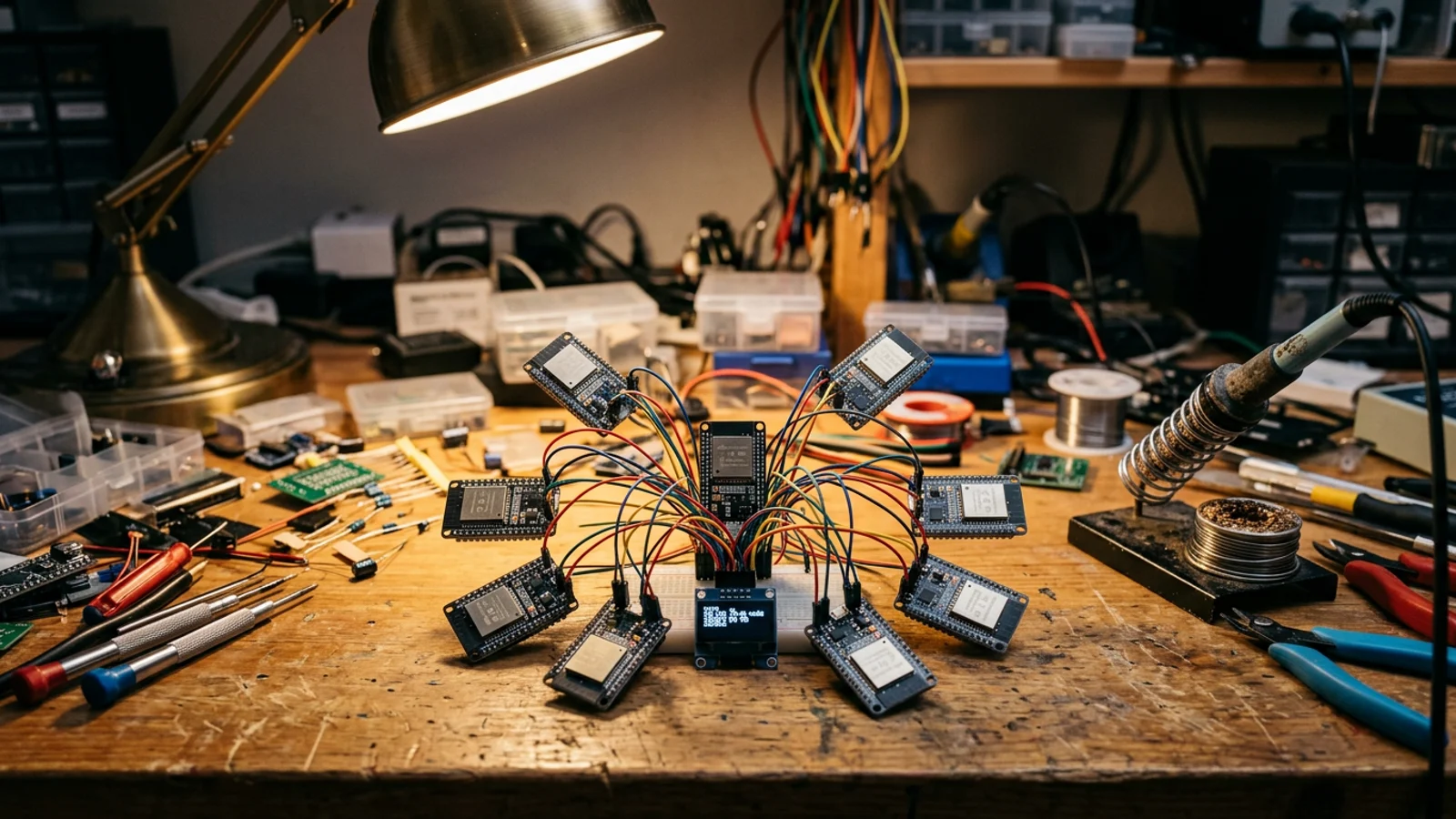
A hobbyist posting as Major-Nebula1743 on the ESP32 subreddit described stitching seven ESP32 boards together over ESP-NOW to run a language model in the neighborhood of 400 million parameters, according to a writeup by XDA Developers. The project builds on an earlier single-board effort that got a 56M-parameter model running over the same ESP-NOW wireless protocol.
This is a community build, not a peer-reviewed benchmark — there's no independent tokens-per-second figure to cite, and the specs come from the builder's own description. It's worth reading as a proof of concept rather than a working product.
What's interesting is the strategy shift: instead of squeezing an ever-larger model into one chip's flash and PSRAM — the approach behind this summer's single-board ESP32 language-model projects — this splits the work across a cluster of cheap, individually weak boards. It's a different answer to the same question: how much model can a few dollars of silicon carry, and does it have to be one chip doing all the carrying?
Three different scales of the same question today — an open-model lab sizing a variant for the edge, a RISC-V board maker learning that shipping silicon is easier than shipping a distro, and a hobbyist deciding one microcontroller isn't enough and reaching for seven.
References & Citations
- Crypto Briefing — IBM Granite 4.2 for local deployment, August 25, 2026 — https://cryptobriefing.com/ibm-granite-4-2-models-local-deployment/
- Tech Times — LilyGo K230 Kit RISC-V AI pocket computer, August 24, 2026 — https://www.techtimes.com/articles/325384/20260824/lilygo-launches-k230-kit-risc-v-ai-pocket-computer-blocked-current-ubuntu.htm
- XDA Developers — seven ESP32s clustered into a ~0.4B LLM — https://www.xda-developers.com/someone-wired-up-seven-esp32s-to-create-a-04b-llm-and-so-can-you/
Subscribe to new posts from theaivibe.org
Related Posts
A 1-Bit AI Trick Shrinks a 70B Model to Fit on a $200 GPU
Samsung's sub-1-bit quantization paper gets a reality check, plus fresh research on tiny LLMs and ESP32 voice silicon.
Small AI Models Steer Robots While ESP32 Boards Do the Grunt Work
A dual-core Arduino runs robot policies on-device, a paper argues for skill-sized models over one big brain, and two ESP32 boards ship.

Windows Learns GGUF as AI Agents Design Their Own Inference Chip
Microsoft wires llama.cpp into Windows ML's NPU stack while an agent-built FPGA accelerator and fresh AI PC benchmarks show where edge inference actually stands.