Edge Dispatch: Intel's Wildcat Lake Brings a Modest NPU to AI PCs, While Edge AI Claims It's Going Mainstream in IoT
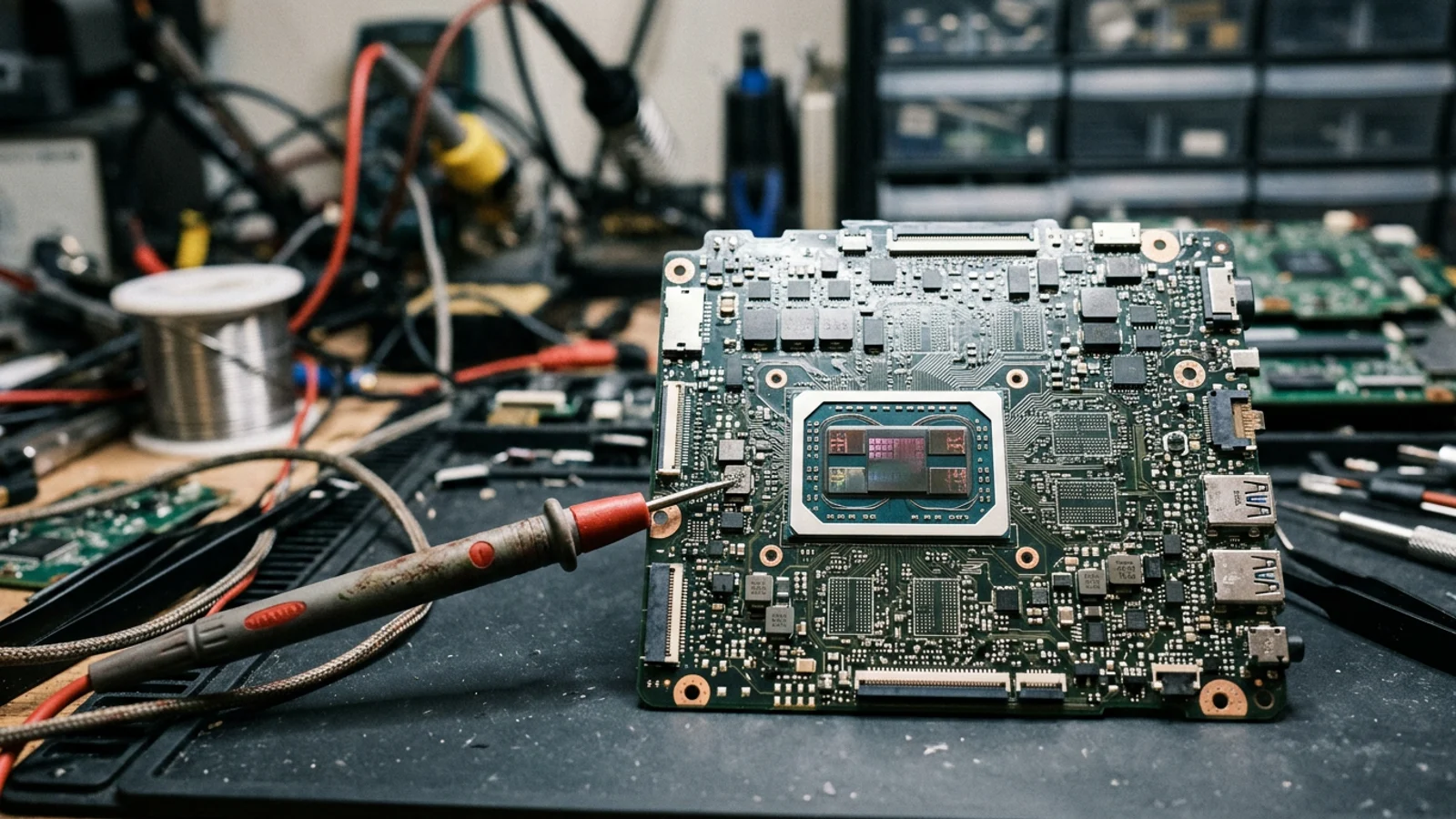
Intel details a 17 TOPS NPU chip built for chiplets, and an industry trend piece argues edge inference is leaving the pilot stage — both light on independent proof so far.
Intel's Wildcat Lake: a chiplet-ready NPU, not a flagship one
At Hot Chips 2026, which ran from August 24 to 26, 2026 according to thequantumdispatch.com, Intel detailed Wildcat Lake, the client and edge processor set to ship as its Core Series 3 line. Coverage from claypier.com describes a chip built on Intel 18A that pairs two performance cores and four efficiency cores with Xe3 integrated graphics carrying XMX matrix acceleration, backed by an NPU Intel rates at up to 17 TOPS, LPDDR5X-7467 memory, Wi-Fi 7, and Bluetooth 6.0.
That NPU number is worth sitting with. It lands well below the roughly 45-50 TOPS NPUs AMD and Qualcomm already ship in current-generation AI PC silicon, so Wildcat Lake reads as an efficiency or entry tier, not a challenger to Copilot+ PC flagships. What may matter more long term is that Wildcat Lake is the first Intel processor built around UCIe, the open chiplet interconnect standard, which should make it cheaper to bolt an NPU tile made on one process onto a CPU die made on another.
None of this has been independently benchmarked. Wildcat Lake was shown as an architecture disclosure at a conference, not a shipping product with test results, so how its 17 TOPS NPU actually handles a quantized small language model or a local voice pipeline is still unknown. The chiplet plumbing is the more durable story here — it's the kind of packaging change that eventually lets smaller edge-hardware vendors mix and match silicon instead of designing one monolithic SoC.
A trend piece argues edge AI is leaving the pilot stage in IoT
A report from iottechnews.com, published this week, argues that edge AI IoT devices — hardware that processes and acts on data locally instead of routing it to the cloud — are moving from pilot programs into mainstream product portfolios during 2026. The framing is industry-wide, not tied to a single company or chip launch.
The honest caveat: this is analysis, not a product announcement. It doesn't name a specific accelerator, a TOPS figure, or a shipping device with a benchmark attached, so it works better as a temperature check on where sensor and appliance makers are pointing their roadmaps than as hard news with something to test.
Still, the direction tracks with what this beat has watched build for months — hearing aids, glasses, and now general-purpose IoT categories are all being sold on the promise that inference stays on the device. Whether that promise survives independent testing, rather than vendor framing, remains the open question for nearly every product riding this wave.
Two different kinds of edge-AI story today: one an unbenchmarked chip disclosure, the other an unnamed industry trend. Both are worth tracking, and both still need real hardware and independent numbers before they mean much beyond a slide deck.
References & Citations
- claypier.com — Intel Wildcat Lake details from Hot Chips 2026 — https://claypier.com/en/intel-crescent-island-hot-chips-2026/
- thequantumdispatch.com — Hot Chips 2026 session dates and Intel silicon roundup — https://thequantumdispatch.com/articles/intel-diamond-rapids-crescent-island-hot-chips
- iottechnews.com — edge AI IoT devices mass-market trend piece, August 2026 — https://iottechnews.com/news/edge-ai-iot-devices-mass-market-inflection-2026/
Subscribe to new posts from theaivibe.org
Related Posts

A Hexagon NPU Learns New AI Tricks While Edge Robots Get Lighter World Models
llama.cpp opens a path to Qualcomm's Hexagon NPU, a 2-bit automation model surges on GitHub, and a lighter world model targets robot arms.
A 1-Bit AI Trick Shrinks a 70B Model to Fit on a $200 GPU
Samsung's sub-1-bit quantization paper gets a reality check, plus fresh research on tiny LLMs and ESP32 voice silicon.
Small AI Models Steer Robots While ESP32 Boards Do the Grunt Work
A dual-core Arduino runs robot policies on-device, a paper argues for skill-sized models over one big brain, and two ESP32 boards ship.