OpenClaw: Meta's Open-Source Robotic Manipulation Framework and Why It Matters
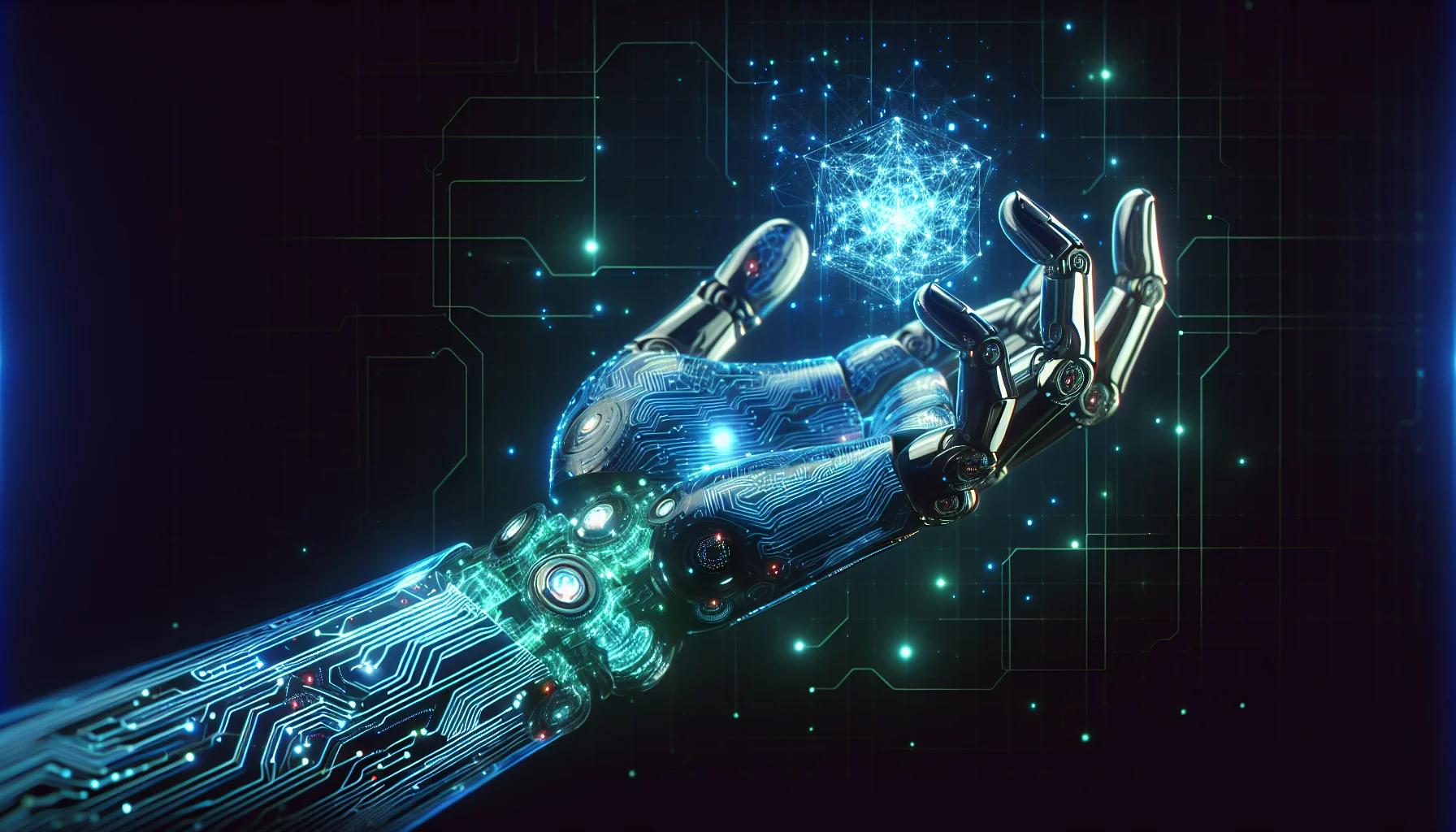
Meta's OpenClaw brings transformer-based robotic manipulation to the open-source community. Here's what it means for the future of embodied AI agents.
What is OpenClaw?
In late 2024, Meta AI released OpenClaw — an open-source framework for robotic manipulation that combines transformer architectures with real-world dexterity. It's not just another robotics toolkit. It represents a fundamental shift in how we think about embodied AI agents.
OpenClaw provides pre-trained models, simulation environments, and hardware-agnostic APIs that allow researchers and developers to build robots that can grasp, manipulate, and interact with physical objects using the same kind of reasoning that powers language models.
Why Robotic Manipulation is the Next Frontier
We've solved text generation. We've largely solved image generation. We're making rapid progress on video. But physical interaction with the real world remains the hardest problem in AI.
Consider what's required to pick up a coffee cup:
- Visual perception (where is it, what shape, how full)
- Physics reasoning (weight distribution, grip force, fragility)
- Motor planning (approach trajectory, finger positions, lift path)
- Adaptive control (adjust if it slips, if weight is unexpected)
Language models solve analogous problems in text. OpenClaw attempts to do the same for physical manipulation.
Architecture: Transformers Meet Robotics
OpenClaw's core innovation is applying the transformer architecture to manipulation tasks:
- Visual Encoder: Processes camera input through a Vision Transformer (ViT) to create spatial representations
- Policy Transformer: Takes visual features + proprioceptive state (joint angles, forces) and predicts action sequences
- Action Decoder: Converts predicted actions into motor commands with force feedback
The key insight is pre-training on diverse manipulation data — the same way GPT pre-trains on internet text, OpenClaw pre-trains on millions of simulated and real grasping episodes.
The Open-Source Advantage
What makes OpenClaw significant isn't just the technology — it's the licensing. By releasing under Apache 2.0, Meta has ensured that:
- Academic researchers can build on it without licensing barriers
- Startups can commercialize robotic products using the framework
- The community can fine-tune models on specialized tasks (medical, manufacturing, agriculture)
- Hardware manufacturers can integrate it with their robotic platforms
From Digital Agents to Physical Agents
OpenClaw sits at the intersection of two massive trends: the agentic AI revolution (autonomous systems that plan and act) and embodied intelligence (AI that operates in the physical world).
Today's software agents write code and browse the web. Tomorrow's agents — built on frameworks like OpenClaw — will assemble products, perform surgery assistance, and maintain infrastructure. The jump from digital to physical agency is the next great leap in AI.
Limitations and Challenges
OpenClaw is promising but far from production-ready for general tasks:
- Sim-to-real gap: Models trained in simulation don't always transfer cleanly to physical robots
- Safety: A language model that hallucinates is annoying; a robot that hallucinates is dangerous
- Hardware dependency: Performance varies significantly across different robot platforms
- Compute requirements: Real-time inference for manipulation requires specialized hardware
Conclusion
OpenClaw represents the democratization of robotic manipulation AI. Just as open-source LLMs (LLaMA, Mistral) accelerated the language AI ecosystem, OpenClaw will accelerate embodied AI. The agents of the future won't just think — they'll reach out and touch the world.
Related Posts
Why AI Agents Are Replacing SaaS Dashboards in 2026
Enterprise teams are ditching traditional SaaS dashboards for autonomous AI agents that monitor, decide, and act. Here's what's driving the shift and what it means for software builders.
Understanding Retrieval-Augmented Generation: Architecture, Pitfalls, and Production Lessons
RAG is the most deployed LLM pattern in production today. After building RAG systems for 18 months, here are the architectural decisions that matter and the mistakes that don't show up until scale.

The Real Cost of Running LLMs in Production: A Breakdown
Token costs are just the tip of the iceberg. After running LLM workloads in production for a year, here's where the money actually goes — and how to cut costs without cutting quality.